Aerospace
Structures and systems where tolerance, load and safety factors are decided by the math students are learning right now.

About
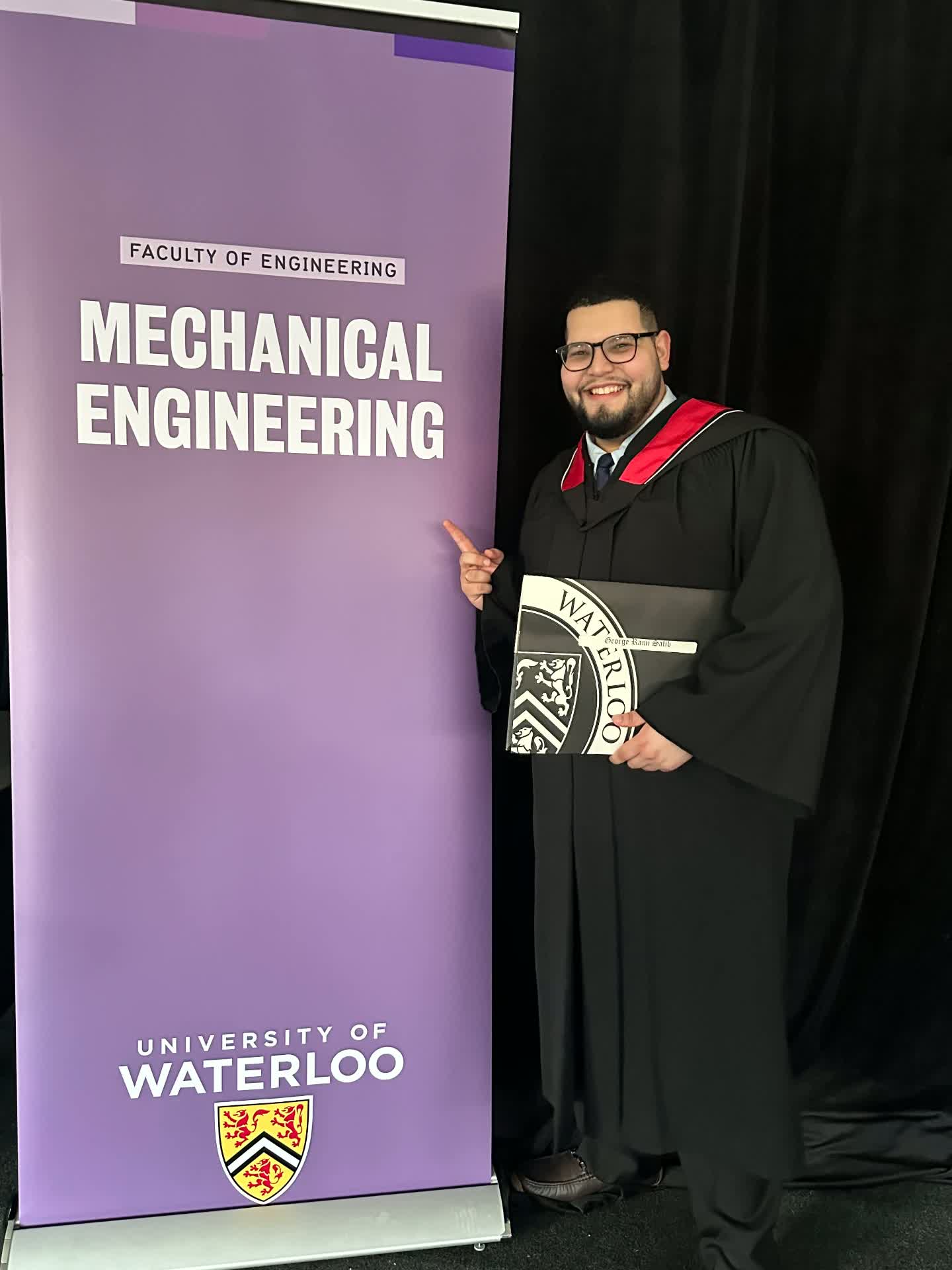
George is a Mechanical Engineering graduate of the University of Waterloo who has worked across the aerospace, automotive and nuclear industries. He tutors high-school Math, Physics and Science one-on-one, using the same reasoning he applies professionally: understand the problem, model it clearly, then solve it.
Credentials
Waterloo's engineering program is co-op based, so the degree came with years of real industry work alongside the coursework. That combination shapes how George teaches.
Structures and systems where tolerance, load and safety factors are decided by the math students are learning right now.
Fast-moving design and testing work built on mechanics, dynamics and materials.
A field where thermodynamics, precision and disciplined problem-solving are non-negotiable.
Teaching philosophy
Formula sheets run out fast in senior Math and Physics. Sessions are built so a student can rebuild the result even when they've forgotten the shortcut.
Every first session diagnoses the real gap, which is usually one or two units earlier than the current one.
The student drives the pen. George asks the questions an engineer would ask at each step.
Vectors, rates of change and energy all show up in aerospace and automotive work — that context makes them stick.
Every session ends with specific practice, so the next one starts from progress rather than review.